Return to Texas Entomology - Compiled by Mike Quinn
| Family |
# spp. in: |
TX | N.Amer. | ||
| Heteronemiidae | Common Walkingsticks | 14 | 20 | in six genera | |
| Pseudophasmatidae | Striped Walkingsticks | 02 | 02 | Anisomorpha spp., range from Florida to east Texas | |
| Phasmatidae | Winged Walkingsticks | 01 | Aplopus mayeri in southern Florida. | ||
| Timematidae | Timemas Walkingsticks | 10 | Timema spp., found in California, Nevada, and Arizona |
Worldwide there are 2500 to 3000 stick species, most are of tropical distribution.
Earlier taxonomy lumped all the above families under Phasmatidae, Suborder Phasmatodea, Order Orthoptera.
Family Heteronemiidae
Diapheromera arizonensis Arizona Walkingstick
Diapheromera covillea Creosote Bush Walkingstick
Diapheromera tamaulipensis Tamaulipas Walkingstick
Diapheromera femorata Common or Northern Walkingstick
Diapheromera persimilis Similar Walkingstick
Diapheromera tamaulipensis Tamaulipan Walkingstick
Diapheromera torquata Twisted Walkingstick
Diapheromera velii Prairie Walkingstick
Megaphasma denticrus Giant Walkingstick
Parabacillus coloradus Colorado Short-horned Walkingstick
Parabacillus hesperus Western Short-horned Walkingstick
Pseudosermyle straminea Gray Walkingstick
Pseudosermyle strigata Striped Walkingstick
Sermyle mexicana Mexican Walkingstick
Family PseudophasmatidaeAnisomorpha buprestoides Southern Two-striped Walkingstick, or "Spitting Devil" - Most common stick insect in FLorida
Anisomorpha ferruginea Northern Two-striped Walkingstick, or "Prairie Alligator"Note, Texas Walkingstick diversity second only to that of California. (Arment, 2005)
One Texas species, the Giant Walkingstick (Megaphasma dentricus) grows to almost 7 inches long, the longest insect in the United States!
Photo - BugGuide
Walkingsticks - AgriLife, TAMU
GWS is ID'ed (other than by size) by the prominent spines on the second and third legs.
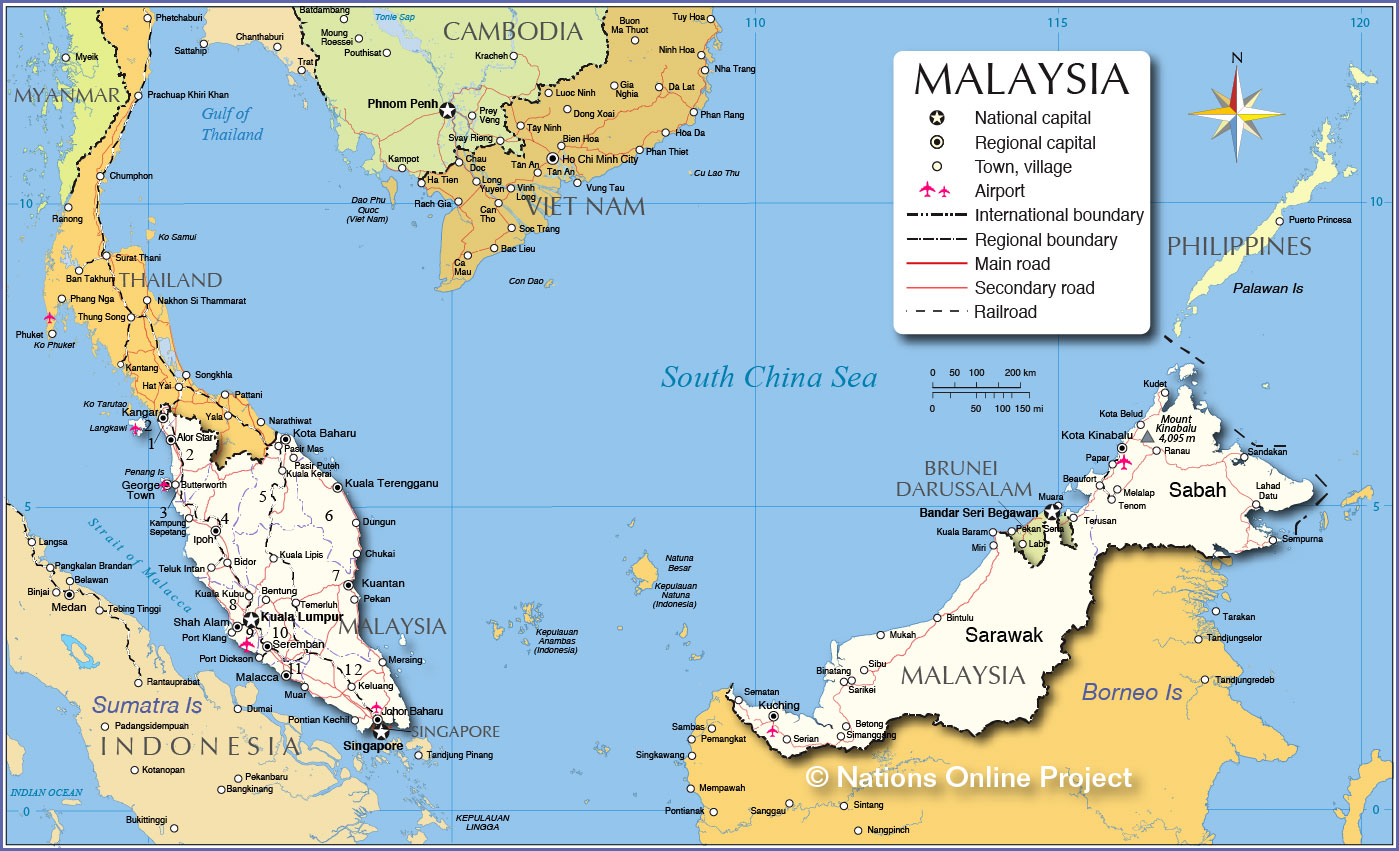
The longest insect on earth was a female Pharnacia serratipes, endemic to Peninsular Malaysia, that measured 555mm (nearly 22 inches) from extended front leg to extended rear leg (Branscome, 1998).
However, per this blog (with a photo), Phobaeticus serratipes (formerly Pharnacia serratipes), specimens of Phobaeticus chani and Phobaeticus kirbyi have now been recorded as longer.
Family Heteronemiidae - Common Walkingsticks
Diapheromera femorata Common Walkingstick 68-101 mm. Arizona - Florida - Maine - Minnesota This is reportedly the only U.S. species that occasionally becomes abundant enough to damage plants.
"Sometimes occurs in tremendous numbers, defoliating oaks and other trees and shrubs. Usually abundant only every other year in a given locality. In a heavy infestation eggs and fecal pellets are dropped to the ground in great numbers, producing a pattering sound, like rain, accompanied by a peculiar seething sound of thousands of jaws chewing the leaves." (Helfer, 1953)
In 2003, an email circulated about a Walkingstick that caused temporary blindness to the owner's pet dog, "Megan". This email had the air of an urban legend, i.e. no names, dates or specific locations are given.
I received different versions of this email with the subject: "FW: Safety Notice - Nasty Bug", four times in August of 2003. (Later versions were titled: "FW: Safety Notice - Nasty Walkingstick Bug".)
Some versions of the email had added text suggesting that a nameless entomologist at Texas A&M identified the insect. Other versions included an incident with a Walkingstick in a Florida nursery.
The text suggested either Anisomorpha buprestoides or Anisomorpha monstrosa induced temporary blindness.
Note that A. monstrosa is a Central American species and has not been documented along the Gulf Coast as the email suggested.
The two of the attached photos (including the one labeled "nasty walking stick1.jpg") circulating with this email are the same images as the first two stick photos posted HERE.
Despite the email's misidentified photos and the lack of specifics, the following two native U.S. species are in fact of some medical importance:
Family Pseudophasmatidae - Striped Walkingsticks
Anisomorpha buprestoides Southern Two-striped Walkingstick 39-77 mm. E. Texas - Florida - South Carolina Anisomorpha ferruginea Northern Two-striped Walkingstick 30-36 mm. E. Texas - Florida - Virginia - Kansas
EA Paysse MD, et al. 2001. Ocular Injury from the Venom of the Southern Walkingstick. Ophthalmology 108: 190-191.
Durden, C. 1999. Learn About ...Texas Insects. Texas Parks & Wildlife Press, Austin. 60 pp. Full PDF
Anisomorpha ferruginea - The 'Prairie Alligator' "may be found walking on trees and on the sides of houses in fall and winter. Mating pairs of large females and tiny males may stay coupled for several days. When disturbed, they spray an acrid fluid from glands behind the head. Be careful, they aim for the eyes."
The first account of A. buprestoides' effect on humans was apparently by Stewart (1937), who wrote about an incident in Texas:
"The victim was observing a pair of Anisomorpha buprestoides . . . with his face within two feet of the insects, when he received the discharge in his left eye. . . The pain in his left eye was immediately excruciating; being reported to be as severe as if it had been caused by molten lead. Quick, thorough drenching with cool water allayed the burning agony to a dull aching pain. The pain eased considerably within the course of a few hours. Upon awakening the next morning the entire cornea was almost a brilliant scarlet in color and the eye was so sensitive to light and pressure for the next forty-eight hours that the patient was incapacitated for work. Vision was impaired for about five days."
The recommended treatment includes immediate irrigation of the eye with large amounts of water, followed by administration of over-the-counter analgesics if needed for pain. Medical attention should be sought if more severe symptoms, such as decreased vision or light sensitivity, are present. (Thomas 2003)Thomas, M.C. 2003. The Two-striped Walkingstick, Anisomorpha buprestoides (Stoll) (Phasmatodea: Pseudophasmatidae). Florida Department of Agriculture & Consumer Services, Division of Plant Industry. Entomology Circular No. 408, pg 1-4.
Albert, R.O. 1947. Another case of injury to the human eye by the Walking Stick, Anisomorpha (Phasmidae). Entomological News 58(3): 57-59.
Arment, C. 2005. Stick Insects of the Continental United States and Canada: Species and Early Studies. Coachwhip Publications, Landisville, PA. 202 pp.Bedford, G.O. 1978. Biology and ecology of the Phasmatodea. Annual Review of Entomology 23: 125-49.
Blatchley, W.S. 1920. Orthoptera of northeastern North America. Nature Publishing Company, Indianapolis.
Bradley, J.C., and B.S. Galil. 1977. The taxonomic arrangement of the Phasmatodea with keys to the subfamilies and tribes. Proceeding of the Entomolgical Society of Washington 79(2): 176-208.
Bragg, P.E. 1995. The longest stick insect in the world, Pharnacia kirbyi (Brunner). Entomologist. 114: 26-30.
Branscome, D. 1998. Chapter 33: Longest. Pp. 82-83. In: T.J. Walker. (Editor). UF Book of Insect Records. University of Florida, Gainesville.
Carlberg, U. 1985. Chemical defence in Anisomorpha buprestoides (Houttuyn in Stoll') (Insecta: Phasmida). Zool. Anz. Jena 215: 177-188.
Caudell, A.N. 1903. The Phasmidae, walking sticks of the United States. Proceedings of the U.S. National Museum 26: 863-886.
Chow, Y.S. & Y.M. Lin. 1986. Actinidine, a defensive secretion of the stick insect, Megacrania alpheus Westwood (Orthoptera: Phasmatidae). Journal of Entomological Science 21: 97-101.
Davidson, B.S., T. Eisner, & J. Meinwald. 1991. 3,4 Didehydro-â,â,-caroten-2-one, a new carotinoid from the eggs of a stick insect Anisomorpha buperestoides. Tetrahedron Letters 32: 5651-5654.
Dziezye, J. 1992. Insect defensive spray-induced keratitis in a dog. Journal of the American Veterinary Medical Association 200: 1969.
Durden, C. 1999. Learn About ...Texas Insects. Texas Parks & Wildlife Press, Austin. 60 pp. Full PDF
Eisner, T. 1965. Defensive spray of a phasmid insect. Science 148: 966-968.
Eisner, T., R.C. Morgan, A.B. Attygalle, S.R. Smedley, K.B. Herath, J. Meinwald. 1997. Defensive Production of Quinoline by a Phasmid Insect (Oreophoetes peruana). Journal of Experimental Biology 200(19): 2493-2500.
Giese, R.L. & Knauer, K.H. 1977. Ecology of the walkingstick. Forestry Science 23: 45-63.
Gray, G.R. 1835. Synopsis of the species of insects belonging to the family of Phasmidae. London. 48 pp.
Happ, G.M, J.D. Strandberg, C. M. Happ. 1966. The terpene-producing glands of a phasmid insect. Cell morphology and chemistry. Journal of Morphology 219: 143-160.
Hatch, R.L., S.D. Lamsens, J.E. Perchalski. 1993. Chemical conjunctivitis caused by spray of A. buprestoides Two-striped walkingstick. Journal of the Florida Medical Association 80: 758-759.
Hebard, M. 1943. The Dermaptera, and Orthopterous families Blattidae, Mantidae, and Phasmidae of Texas. Transactions of the American Entomological Society 68: 239-310.
Helfer, J.R. 1953. How to know the grasshoppers, cockroaches, and their allies. William C. Brown Co. Publishers, Dubuque, IA. 353 pp.
Hetrick, L. A. 1949. Field notes on a color variant of the two-striped walkingstick, Anisomorpha buprestoides (Stoll). Florida Entomologist 32(2): 74-77.
Hetrick L.A. 1949. The oviposition of the two-striped walking-stick, Anisomorpha buprestoides (Stoll). Proceedings of the Entomological Society of Washington 51: 103-104.
Littig, K.S. 1942. External Anatomy of the Florida Walking Stick Anisomorpha buprestoides Stoll. The Florida Entomologist 25(3):33-41.
MacAtee, W.L. 1918. Vaporous discharge by Anisomorpha buprestoides (Orthoptera: Phasmidae). Entomological News 29: 388.
Meinwald, J., Chadha, M.S., Hurst, J.J. & Eisner, T. 1962. Defense mechanisms of arthropods. IX. Anisomorphal, the secretion of a phasmid insect. Tetrahedron Letters 1: 29-33.
Moxey, C.F. 1971. Notes on the Phasmatodea of the West Indies: two new genera. Psyche 78(1/2): 67-83.
Moxey, C.F. 1972. The stick-insects (Phasmatodea) of the West Indies: Their systematics and biology. Unpublished thesis, Harvard University, Cambridge, Massachusetts. 211 pp.
Patrock R.W. 1988. Provisional Checklist of Phasmatodea (Phasmids, Mantids, and Cockroaches) of Brackenridge Field Laboratory.
Paysse, E.A., S. Holder & D.K. Coats. 2001. Ocular Injury from the Venom of the Southern Walkingstick. Ophthalmology 108: 190-191. (Synopsis)
Seow-Choen, F. 1995. The longest insect in the world. The Malayan Naturalist 49(42): 12.
Stewart, M.A. 1937. Phasmid injury to the human eye. Canadian Entomologist 69: 84-86.
Thomas, M.C. 2003. The Two-striped Walkingstick, Anisomorpha buprestoides (Stoll) (Phasmatodea: Pseudophasmatidae). Florida Department of Agriculture & Consumer Services, Division of Plant Industry. Entomology Circular No. 408, pg 1-4.
Wilkins, O.P. & O.P. Breland. 1951. Notes on the giant walking stick, Megaphasma deticrus (Stål) (Orthoptera: Phasmatidae). Texas Journal of Science 3: 305-310.07 July 2012 © Mike Quinn / entomike@gmail.com / Texas Entomology